Building science
Random thoughts on renovating.
That is what we called this section when we started it. It is technical writing by the person who runs the company, about the things we run into on a regular basis.
“We hope we can transfer some of our knowledge and clarify some of the items that we encounter on a regular basis in our operations.” That was the point when Dave Mathieson started writing these, and it still is. Nothing here is a sales pitch. It is how exterior walls actually work.
Rain-screen walls: the four D’sDeflection, drainage, drying and durability, and why a wall that misses one of them fails silently for years.02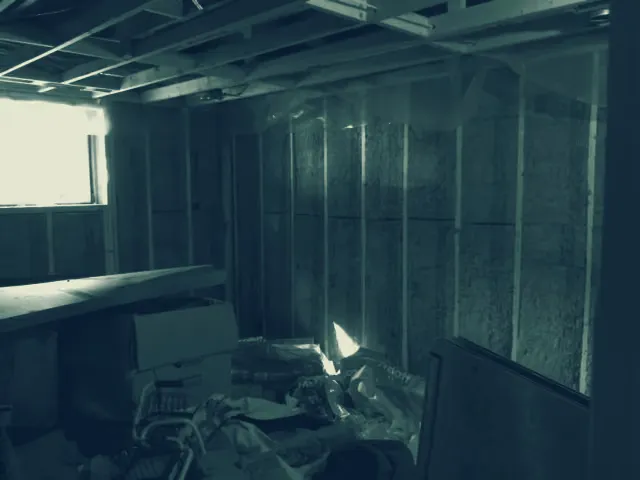 Some notes on insulation and renovationsInsulation on its own does very little. The vapour retarder and the air barrier are what make a wall actually perform.03
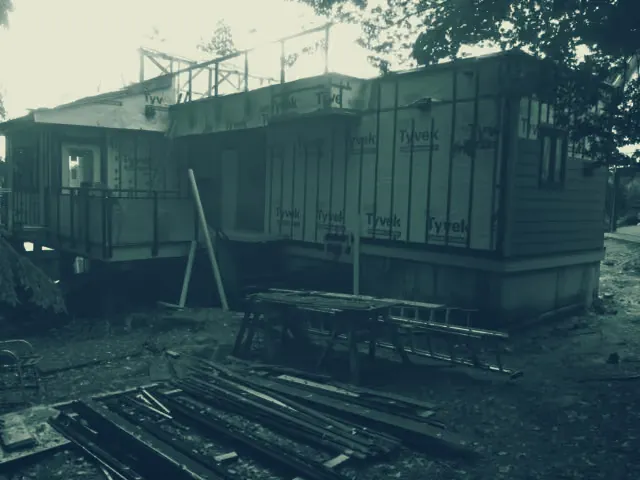 Plywood sheathing: is it worth it?We have taken walls apart where both were used side by side. Here is what we found, and what we now specify.
Quick answers
The three questions we get most.
What are the four D’s of a rain-screen wall?
Deflection, drainage, drying and durability. Deflection sheds wind-driven rain at the cladding face. Drainage lets whatever penetrates run down a cavity and exit at flashing lines. Drying vents the cavity bottom to top as the cladding warms. Durability means the components in the wet zone are cedar or preservative-treated wood, galvanized metal, and waterproof membranes.
Which side of the insulation does the vapour retarder go on?
The warm side. Interior moisture moves from warm to cold, so a vapour retarder on the cold side of the insulation creates a condensing surface inside the wall assembly instead of preventing one.
Is plywood or OSB better for exterior wall sheathing?
Plywood. Its softwood veneers are fully coated with waterproof adhesive in a laminar form, so when moisture reaches it, decay tends to stay at the surface. OSB is made of strands of lower-durability species oriented in many directions, which lets decay spread through the sheet. We have opened moisture-damaged walls and found intact but water-stained plywood next to completely decayed OSB.